
Logo

Designed for Whom? The Mirage of Women-Centric Digital Finance in Ethiopia

Post Img

Closing Ethiopia’s gender gap in digital finance won’t happen with slogans. “Women-centric” DFS too often means minor tweaks to products never designed around women’s real lives.

December 21, 2025
Etenat Awol Avatar

Etenat Awol

Addis Ababa, Ethiopia

Post Img

Despite growing attention to the gender gap in digital finance, efforts to promote “women-centric” digital financial services in Ethiopia often stop at rhetoric. Policymakers and providers cite stark disparities in access and usage, then prescribe vaguely “tailored” products that rarely reflect women’s lived economic realities

Closing the gap requires moving beyond labels and incremental tweaks toward genuinely gender-intentional design, grounded in data, context, and accountability.

This article is an output of AKOFADA (Advancing Knowledge on Financial Accessibility and DFS Adoption), a project working to increase knowledge and transparency within Ethiopia’s DFS ecosystem


Too often, when financial experts and policymakers discuss closing the gender gap in digital financial service (DFS) usage and financial inclusion, they seem to follow the same predictable script. 

It typically begins with experts citing stark numbers, such as a wide disparity in account ownership between men and women in Ethiopia, gaps in access to bank accounts, and lower uptake of mobile money among women. The data is, of course, always quite striking as the gap in account ownership of 14.9% is higher than the Sub-Saharan aggregate of 12%. Women in Ethiopia are less likely to have an account, a mobile phone, or access to DFS.  All too common, these dismal statistical figures are followed by generic conclusions with little nuance.

Almost reflexively, the solution is framed as the need for “tailored” or “women-centric” financial products. The prescription sounds logical, even progressive, at first glance, but too often loses its strength when the time comes for a coherent path to deploying products tailored to the lived realities of women. Especially in Ethiopia’s context, where concrete examples remain scarce, “tailoring” risks becoming a catch-all phrase, persuasive in language but thin in substance, sidestepping deeper questions about how digital finance is designed, priced, and delivered, and for whom it truly works. 

And that’s precisely why we need to break it down. 

What Exactly are "Women-Centric" or Tailored DFS Products?

The early foundations of “women-tailored” financial products were laid with the passing of the Equal Opportunities Act back in the 1970s, when discriminatory lending based on gender, race, and marital status was prohibited in the US. It would take several decades before this drive towards financial inclusivity translated into DFS products and as a crucial topic among development partners. At its core, the concept moves beyond gender-neutral offerings to intentionally “design for women,” a philosophy that Jessica Schnabel, the IFC’s global head of Banking on Women, has argued is fundamentally more profitable for financial institutions than a neutral approach.

This design thinking responds to the lived realities of women’s financial lives: irregular income streams shaped by informal and care work; a heightened need for security and privacy in transactions; and a preference for tools that build resilience for families and communities.

Such DFS products can include savings, credit, insurance, and payment tools redesigned through gender-intelligent or women-centered methodologies. Often using human-centered design, providers segment markets by gender, simplify interfaces for lower literacy, offer flexible repayment, or bundle features like maternity-linked insurance or emergency savings aligned with irregular informal incomes.

A digital financial service becomes “tailored” or “women-centric” when both its design process and its features are built intentionally around women’s real contexts, rather than simply opened to women as an undifferentiated customer segment. This requires sex-disaggregated data and women-centered research: the provider segments women by income, location, life stage, and activity (for example, market traders, factory workers, rural farmers), studies their constraints (time, mobility, literacy, norms), and then designs products and channels specifically to fit those patterns rather than expecting women to adapt to generic products. 

What makes a DFS genuinely women-centric is therefore less about the label and more about benchmarks across several dimensions. There must be clear, demonstrable evidence that women are not only being reached, but are actively using and benefiting from the product. This requires explicit targets and routine tracking of women’s account ownership, active usage, loan approvals, and repayments, and other key performance indicators, each measured through sex-disaggregated data and reviewed on a regular basis.

On the product side, benchmarks include need-based features (small, flexible ticket sizes; repayment aligned with irregular cash flows; fees and KYC requirements that low-income women can realistically meet), accessible interfaces (USSD/IVR for low literacy, local language, simple menus), safe and acceptable access points (female or trusted agents, privacy safeguards, protection from harassment), and embedded capability-building (on-journey prompts, demos, peer learning) that recognize women’s lower initial confidence with DFS.

Institutional benchmarks also matter: a gender strategy with board-level commitment, staff incentives tied to women’s outreach and quality of service, and systematic use of gender data in product management and risk models are now seen as core markers of “gender-intentional” DFS rather than add-ons. Such frameworks also need to emphasize that women-centric DFS must be “responsible”: products should avoid over-indebting women or pushing them into opaque fee structures, provide recourse mechanisms that women actually use, and be evaluated not just on volumes but on outcomes such as resilience, control over money, and business growth for women clients. 

So, what does that look like on the ground? 

A particularly interesting example of tailored digital financial services comes from Cambodia. In 2020, Women’s World Banking and mobile wallet provider WING worked with garment workers in Phnom Penh to launch Savings Groups 2.0. The initiative grew out of immersive ethnographic research that revealed widespread distrust of mobile apps among women factory workers, compounded by literacy gaps and irregular bonus-based incomes. 

In response, designers recreated familiar tontine-style savings groups using USSD on basic phones. Factory-gate workshops led by female officers focused on group goal setting for expenses such as school fees, supported by peer SMS nudges, simple progress indicators, and penalty-free withdrawals, with door-to-door cash collection during repayments. The results were striking 75 percent of participants met their savings targets within six months, average balances tripled to about $20, 80 percent remained active users, satisfaction reached 85 percent in sex-disaggregated surveys, and women reported greater control over their finances. The model delivered low-cost deposits for providers while demonstrating that women-centered design could scale.

Kenya’s Kopo Kopo offers another parallel lesson on how a digital SME finance product can become a de facto women-centric product without being branded that way. 

Built on M-Pesa merchant payments, Kopo Kopo’s core product is a cash-advance facility that turns digital receivables into working capital. Without requiring collateral, guarantors, or credit history, it mines M-Pesa till flows, offering advances based on recent turnover. Repayment is a fixed percentage of daily digital sales, so slow days don't bring fixed instalments, late fees, or collection calls, the payback schedule breathes with the business. This flexibility is critical for female-owned enterprises with variable income.

Through a lightweight Android app and SMS summaries, merchants get a CRM-style dashboard highlighting "best restock day" based on past sales. For many women traders juggling household and stock expenses, this predictive nudge helps them buy inventory just before peak demand, like uniforms before the new school term. The product also recognizes chamas, women’s savings and investment groups central to Kenyan financial life, offering group advances that let members cross-guarantee based on pooled transactions, rather than borrowing individually.

The result is a usage pattern that looks very different from the platform’s underlying merchant base. Although women account for only about 37 percent of registered merchants on Kopo Kopo, they receive roughly 58 percent of all cash advances. The design receivables-based scoring, elastic repayment, group structures, and low-friction digital channels lines up closely with women’s operating realities, so women not only qualify but actually choose to use the product at scale. 

Several markets have illuminating examples.

In Morocco, Al Barid Bank’s “Hssab Laky” offers zero-fee digital wallets and remittances for low-income women, with roving finance coaches onboarding illiterate clients in markets and rural homes. In Jamaica, JMMB Group’s “Her Wealth” provides SME banking for women-led firms with reduced collateral and cash-flow-aligned grace periods. In India, IndiaP2P peer-to-peer lending marketplace removed male co-signer requirements and uses mom-influencer marketing. In Mali, Orange Money’s “Tin Nogoya” attaches life, disability, and maternity insurance to mobile savings, with weekly premiums and privacy controls. These examples show how tailored DFS products can address women’s specific needs, driving financial inclusion and empowerment.

Despite their diversity, these products share a common design DNA: they replace collateral and guarantors with cash-flow–based or alternative data scoring; keep costs predictable or near zero at entry; and embed goal-based features like school-fee pots, maternity cover, or restock nudges that map directly onto women’s financial lives. They meet women where they already are factories, markets, salons, rural kiosks, using simple channels such as USSD, IVR, SMS, or lightweight apps, often fronted by trusted female agents.

Does Ethiopia have gender tailored DFS products? 

In Ethiopia, a handful of organizations have made an attempt at embracing these principles. Several financial institutions offer several women-focused savings and credit products with digital elements, though fully tailored DFS, as stated above, remain almost non-existent. 

On the savings side, products such as Silanchi (Enat Bank), Lucy (Awash Bank), Sinqe (Cooperative Bank of Oromia), Ahati (Ahadu Bank), Etege (Amhara Bank), and CBE Women’s Savings emphasize low opening balances, flexible deposits, and basic financial literacy. Most are accessible through USSD, mobile apps, or agent networks. While these features lower entry barriers, they largely replicate standard savings accounts with minor adjustments, offering limited segmentation by women’s income patterns, life stage, or location.

Women-focused credit products show a similar pattern. Schemes such as WELOAN (Ahadu Bank), Fetan and Derash (Amhara Bank), Women-Led SME Loan (Awash Bank), Michu Kiya (Cooperative Bank of Oromia), and Enat Bank’s Malefia and Lerassie products provide collateral-free or group-based loans, often with some level of mobile access. Microfinance institutions such as VisionFund also extend group lending under programs like WEDP. 

Comprehensive assessments of women-centric financial products highlight persistent barriers on both the demand and supply sides. Women face low financial and digital literacy, risk aversion shaped by income insecurity, irregular cash flows linked to unpaid care work, limited access to formal identification, and restrictive social norms that constrain mobility. Despite overall active digital payment usage reaching around 20% of adults, only 35% of women in Ethiopia had access to formal financial services and many still prefer branch-based services over digital channels. On the supply side, lending remains collateral-heavy, urban-centric, and weakly segmented. Providers rarely use sex-disaggregated data, KYC and TIN requirements also remain rigid, rural agent coverage is thin, and products are seldom tailored by age, income level, or geography, leaving rural and informal women largely excluded.

Some efforts like the SAFEE program, a partnership involving Kifiya Financial Technologies and the Mastercard Foundation working with commercial banks, have signaled promising outcomes. Leveraging Kifiya’s AI-driven credit scoring system, Qena, participating banks have reportedly disbursed around 55 billion Birr, with women accounting for as much as 80 percent of borrowers.

This scale is notable. The longer-term question is sustainability. Women are excluded from credit not only because of collateral gaps, but also because they lack formal credit histories. Qena’s AI-driven credit scoring system presents an opportunity: if banks systematically integrate these alternative data into their core lending systems, they could begin building durable credit profiles for women borrowers. 

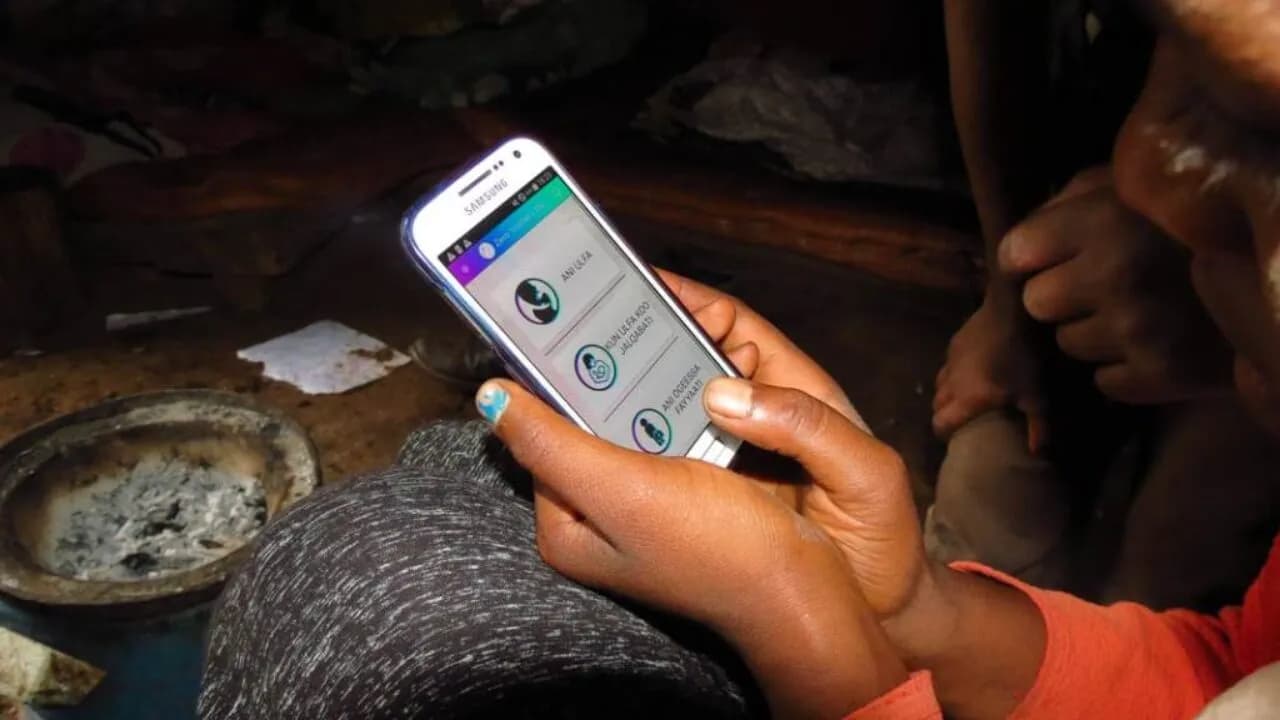
Enat Bank's Malefiya app, powered by Qena, illustrates both the promise and hidden barriers of digital lending for women. It delivers collateral-free loans via smartphone, using automated credit scoring instead of branch visits. To apply, users create a profile with personal details, name, marital status, emergency contact, address, and ID, while larger loans require a business license. Repayments are automatically deducted from a linked account.

The strength is clear: no traditional collateral, faster access, and a real opportunity for women and MSMEs with digital transaction history. Yet the design assumes smartphone ownership, digital and financial literacy, and comfort navigating an app in Amharic or English. Emergency contact effectively acts as a quasi-guarantor, and formal business registration excludes informal entrepreneurs. For lower-income, less-literate women, the app's complex UI/UX could become a genuine obstacle. A simpler, more intuitive design and alternative access paths are essential to serve those who need it most.

Against global benchmarks for gender tailored DFS products, many of these offerings struggle to keep up.

Charting a Path forward

Ethiopia’s draft digital payment strategy (2026-2030) aims to narrow the gender gap in digital payments from 10% to under 3% by 2030. It plans to mandate sex-disaggregated data reporting, fund innovation for women-tailored products (e.g., low-literacy USSD/IVR, flexible repayments), and accelerate female agents through subsidized kits and mentorship, directly addressing women’s 24% lower mobile ownership and 36% literacy barrier.

The strategy also aims to minimize transaction costs and reduce fraud to 0.0008% of total transaction value. Yet this rests on a flawed assumption: that digital is inherently inclusive. That argument could be considered as lazy and insufficient, ignoring women’s specific constraints, limited disposable income, literacy gaps, and restrictive social norms.

More fundamentally, Ethiopia’s DFS products are adapted after the fact, not designed from women’s lived realities. They lack diversity with most offering a little more than traditional saving instruments. Take Ethiopian migrant women workers: they need remittance-linked products tied to long-term goals like housing or business loans, not just digital wallets. Insurance services tailored to women are basically unheard of across the DFS ecosystem. Without diversified use cases, meaningful financial inclusion remains superficial.

In practice, this means DFS products that target women are hardly women-centric. One promising pipeline example is YeneHealth, a Femtech startup working with financial institutions to pilot embedded financing within its platform. Whether such efforts remain pilots or become templates for a new generation of DFS will determine whether "women-tailored" becomes substance or stays rhetoric.

Real progress demands grasping the gendered core of economic structures, policies must deliver immediate access and dismantle power imbalances fueling disparities. Tailored products alone can't fix women's razor-thin disposable income, digital literacy voids, cultural shackles, collateral droughts, credit history gaps, or crumbling infrastructure. Ethiopia needs a bolder blueprint: gender-smart DFS paired with structural demolition, literacy surges, norm-shifting campaigns, alternative scoring, subsidized connectivity to forge real economic power, not just pink-washed patches.