
Logo

"We Have to Dispel the Notion That Capital Markets Are Only for the Wealthy": FAB CEO on Ethiopia’s Budding Market

News image

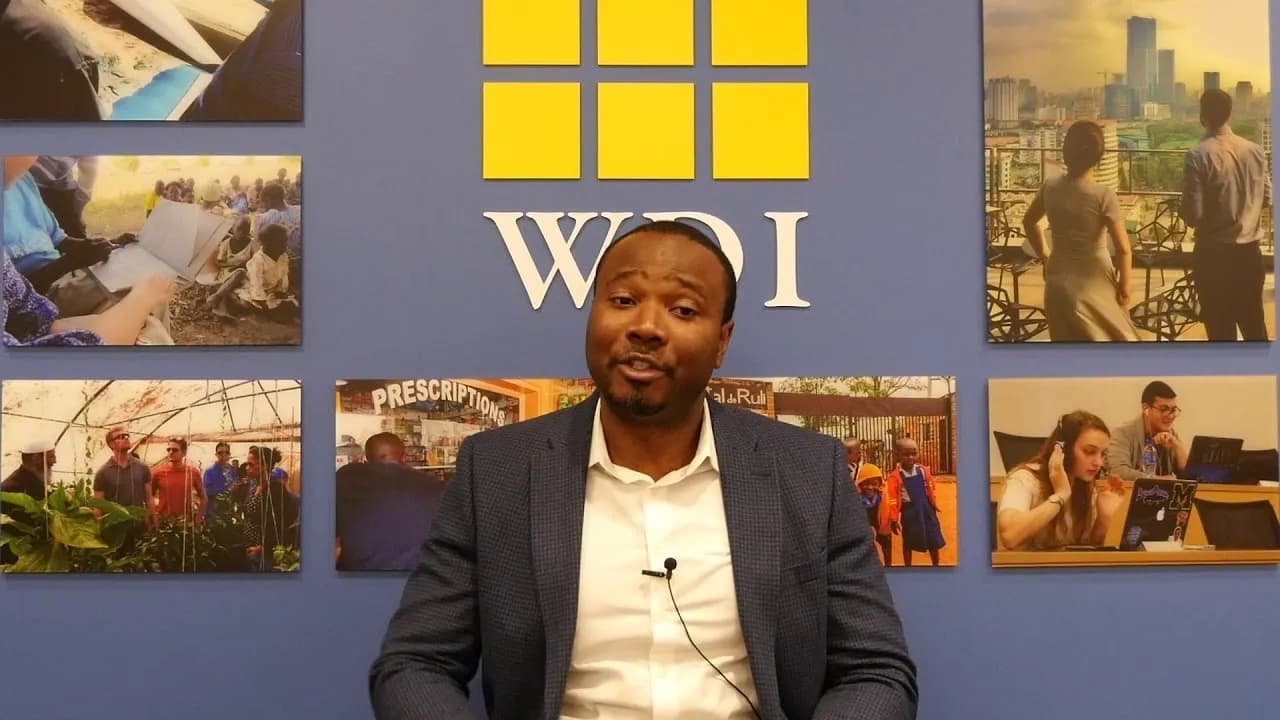
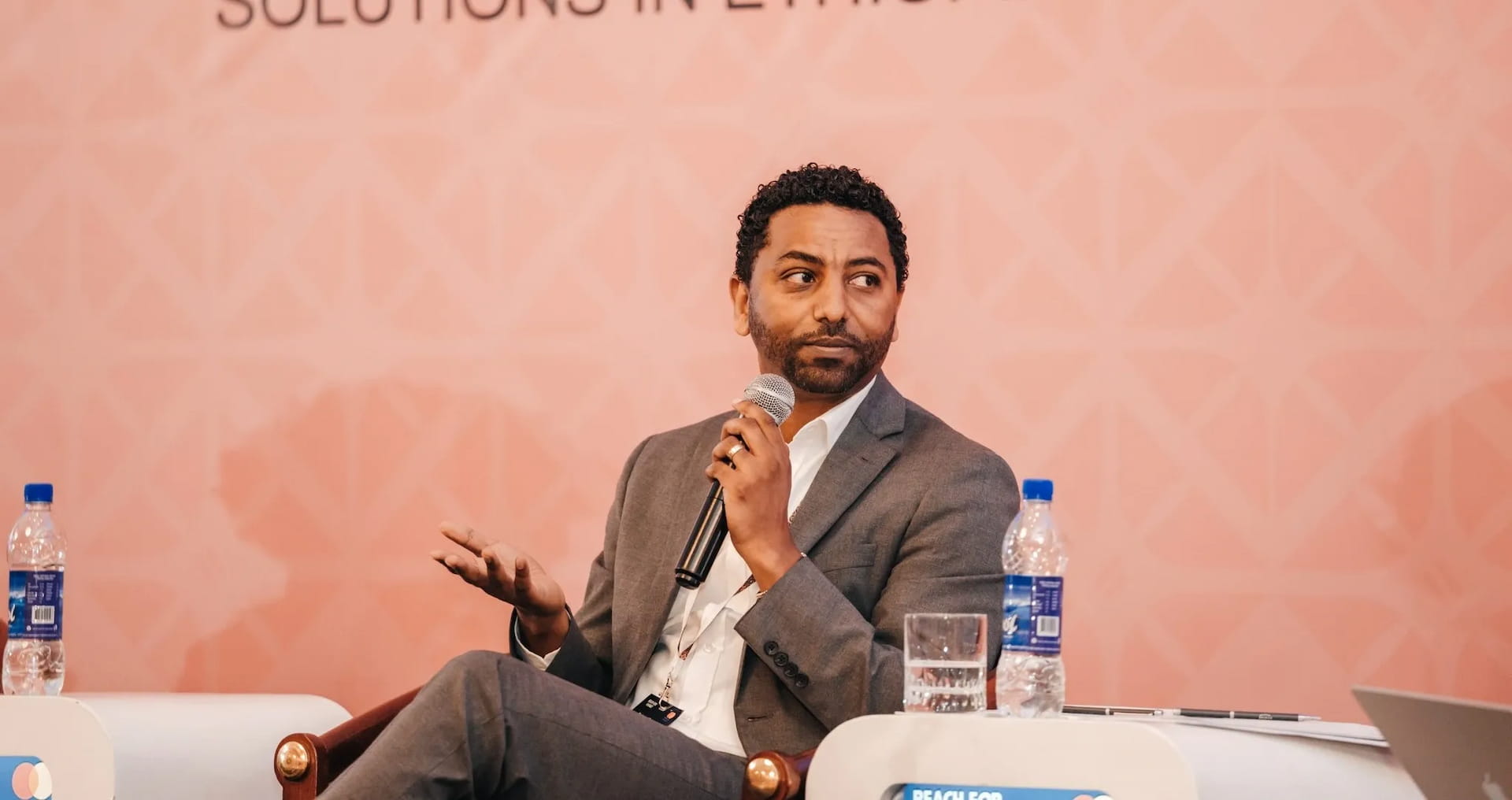
“We have to dispel the perception that capital markets are only for the wealthy,” says Michael Addisu, CEO of First Addis Investment Bank (FAB).

02 December 2025
News Image

Ethiopia’s capital market is still in its early stages, a system with strong regulatory ambitions but limited activity, where fresh players are helping define the rules, expectations, and possibilities as they emerge. Four investment banks, eight advisory services, and one securities dealer have been greenlit by the Ethiopian Capital Market Authority (ECMA) since it started issuing licenses eight months ago.

Among the latest is First Addis Investment Bank (FAB), the first investment bank formed outside the orbit of commercial lenders and rooted instead in two decades of advisory and private-sector development work under First Consult. Etenat Awol, Shega’s Assignment Editor, caught up with Michael Addisu, CEO of FAB, for a wide-ranging conversation on the emergence of Ethiopia’s capital market and the role of one of its newest entrants.

“We have to dispel the perception that capital markets are only for the wealthy,” he says, noting that ordinary savers, MSMEs, and a broader range of enterprises can and should participate as the market evolves. In this interview, he reflects on FAB’s two-decade journey, the regulatory opening that made it possible, and the bank’s strategy as Ethiopia’s still-nascent market takes shape.

*Edited for clarity.

Shega: How did the establishment of First Addis Investment Bank come about?

Michael: The roots go back twenty years. When Nebil Kellow (founder of First Consult and FAB’s Board Chairman), came to Ethiopia after working at an asset management company, he wanted to apply his expertise here. Since it was too early, in terms of regulation and market readiness, for an investment banking business, he went on to establish a consulting firm. I also graduated with an accounting and finance degree, hoping to work in capital markets somehow. I planned to do my postgraduate thesis on capital markets, but after reaching out to the then Ministry of Finance & Economic Development, I realized it was frowned upon by the regulators. I ended up researching microfinance institutions instead. Since joining First Consult two years later, we have worked on projects related to financial sector development, access to finance, and private sector development. As soon as we learned there was an ongoing effort to create a proclamation for the capital market, we began attentively following every development. We thought of applying for a transaction advisory license at first when the directive for service providers was published. But since we had awaited the development for a long time, we decided to upgrade our aspirations to investment banking.

Shega: How long after applying for the license did you obtain it?

Michael: We first sought out an advisory license and had been compiling and filing documents in that regard. But after deciding on investment banking, after a thorough review of the spectrum of services allowed, the process at the Authority took around three months.

Shega: After working for so long in consulting, which skills and capabilities do you think are easily transferable to investment banking, and where do you believe you need to expand?

Michael: While a well-formulated regulatory landscape did not emerge until recently, most of the services slated to be given by investment banks and securities advisors were being provided by consulting companies. Be it valuations, advisory services on mergers & acquisitions, preparation of feasibility studies, and even the drafting of prospectus documents despite the absence of a proper place for share registration, was being done by consulting companies. We have been involved in several engagements related to these services. I have firsthand experience establishing two share companies and several private companies. A consultant is first and foremost expected to have an in-depth understanding of a sector. After working in and around Ethiopia’s financial sector at both firm and sector level for twenty years, you begin to have a comprehensive picture of the whole economy. We know what the major pain points and opportunities are in the current landscape. Capital markets require insights tethered to the real economy, both at the macro and micro levels. We will start by leveraging our expertise to offer advisory services and grow to designing investment products or structuring debt, equities, and securities. For some of the services, we can rely on our expertise from First Consult, the skills within our management and board, while we will need to gradually incorporate some of the more novel capabilities required to provide comprehensive investment banking services. 

Shega: What is the board composition and overall company structure of FAB like?

Michael: We are a private limited company and relatively small. But we believe our independence is what sets us apart from the competition. Our offering is not tied to any financial institution. Two of our board members, including Nebil Kellow and Benjam Vetrelli, have prior experience in capital markets abroad, while another key member has over 35 years of experience in law, which includes the formation of a prominent commercial bank. Our management includes people like Rahel Kebede, who has over 12 years of experience in securities brokerage and asset management at Bear Stearns. We are also arranging partnerships with international players to augment our investment, brokerage, and trading capabilities.

Shega: What was the paid-up capital upon establishment?

Michael. It was 28.4 million Birr. We are trying to flow with the maturity of the market. The development of the market needs to come before diving too deeply into capital raises. Otherwise, most of your investment will be sunk without returns if the sector is not ready. Some aspects of the market also require further regulation. We want to keep pace in terms of capital, technology, and operation. As soon as we go into more advanced services like underwriting, we will be raising additional capital.

Shega: The other investment banks are all independent subsidiaries of commercial banks and might have an easier time raising capital. How do you think you will fare along with the competition in terms of the ease with which you raise capital?

Michael: Capital raising is more about business model, strategy, and trust, be it for yourself or third parties. Having a shareholder or affiliate with deep pockets might make it easier, but the real value of a firm is tied more to the future, not the past. It is about the potential. What will you do with the capital you raise? How do you plan to deploy it to generate an attractive level of return? With a successful investment track record, and as long as we remain confident, compliant, and comfortable on the how and why of raising capital, we have not struggled to raise in this round, and we won’t in future rounds as well. Before we are certain of the viability of the investment, we won’t go into the market eyeing more capital. We are confident that raising capital won’t be an issue.

Shega: What do you believe is your competitive advantage?

Michael: Our strongest suit lies in the in-depth understanding of the essential micro and macro-economic variables that we bring to the table. We have a thorough understanding of what works and doesn’t from two decades of working closely within the financial sector environment. The real question becomes how quickly we can adopt and bring products and services while remaining agile to changing circumstances. Of course, our independence and neutrality are a big selling point. I am not saying the other firms are not; they are technically, legally, and probably operationally independent. It is just that sharing a name could have implications for perceived independence, which is important in this market. We are also privately owned with a smaller group, and we have a clearly defined, independent board and management structure. 

Shega: You have received your license, but trading activity remains muted. What are your operational priorities in the coming year and a half?

Michael: Our current license is on advisory; we expect to finalize the trading and brokerage sections. The brokerage section, we hope to finalize in the next two to three months, since it requires technological and operational integration with the central securities depository and the Ethiopian Securities Exchange. The ongoing share registration process is also a major engagement in the capital market. It shows the status of our share companies legally, financially, and strategically, and they represent the most advanced business entity structure in the country. We are looking at it with serious attention since they will be the ones doing the capital raising, restructuring, or mergers & acquisitions. Our advisory capacity in terms of share registration, as well as market and pipeline development. It will be a primary focus area. Of course, the trading of treasury bills is another area of interest as the secondary market operationalizes and more capital raising ensues. We must make sure our trading and brokerage sections are developed in parallel. We also plan to design investment products, both corporate and retail, to bring to market. We need to work on both the demand and supply sides of capital. All within a reasonable pace.

Shega: Considering how ECMA has demanded share registration for pertinent companies and their inexperience in such a process, are there any specific sectors you plan to engage in more actively?

Michael: Well, share companies have been required to conduct independent audits and general assemblies in the commercial code. What lacks most is experience in valuations. They have not needed to, as most have raised capital by selling shares to existing shareholders. There is considerable market development engagement required in this regard. We hope to be involved in capital-raising engagements for both new firms and established ones. In terms of priority sectors, the financial industry stands out because of the existing regulatory rigor by the central bank, the size of the industry, and the relative familiarity of the players with capital market processes. The financial industry is likely to require investment banking services more than other sectors. But it can't stop there as it risks thinly slicing the available market. Specialized debt and equity services are highly demanded by the broader private sector in the country.

Shega: Will advisory service remain your priority area, or do you plan to actively engage in underwriting services as well?

Michael: We want to be the first name that comes to mind when people think of investment advisory and investment banking. When firms require any form of capital market support, we target becoming the first option. Of course, it is early stages, but that is our working motto. This is a new market, and it is not about competition with other players. Market development requires collaboration, and no single entity can do it alone. We want potential clients to get the exact services they need; sometimes that is us, while others may be positioned better for some services. We must collaborate and cooperate to realize the actual potential of the market. A lone runner approach is not what the market needs in these early stages with so few players. You have to first create the market, then comes competition.

Shega: How will you measure, and define success in the coming three years?

Michael: Of course, we have internal benchmarks and yardsticks. But broadly speaking, we hope to create an understanding among all stakeholders, households, financial sector players, and the broader business community of the utility of ethical engagement in the market. Success for us is more external. Awareness and understanding among the public and private sectors are important to us. We can't have a vibrant market without players like pension funds, for instance. After that, any operational success for FAB will be automatic as long as we work hard and collaborate.

Shega: Considering the limited amount of trading activity, what do you think will be catalytic to kickstart vibrant trading activity?

Michael: First, we need to differentiate between the capital market and the Exchange. This is a common mix-up. While the exchange is a major part of the market, it is not the only one. Of course, we need many listed companies and a variety of securities to create public enthusiasm around the Exchange. But capital is a commodity in this market, and there is plenty of capital already out there. The banking industry alone is walking around with over 3 trillion Birr. The market is large, while trading activity is determined by several push and pull factors. If the ongoing stimulation continues with the Authority and the Exchange as leaders in bringing qualified, ethical, and compliant service providers while share companies and family-owned businesses learn about the market, update themselves, and adopt modern capital raising instruments, it is inevitable. Public awareness creation is the most important stimulant for market activity through the collaboration of both the private and public sector. The incentives are there already to engage both as issuers and investors. With awareness and the right regulatory frameworks, market activity will come by itself.

Shega: Two of the listed shares are from commercial banks. Do you expect many more companies to come forth in the short term?

Michael: Yes. Since we don’t have any evidence on how many are currently in preparation, it is hard to say how many. But I believe the benefits and value provided by listing are too appealing for any serious players to ignore. As more firms see the operational value in listing, many will follow.  I know the Exchange has its own target. I expect firms not operating in the financial sector to come soon. Especially high-turnover businesses, which require a significant amount of capital.